

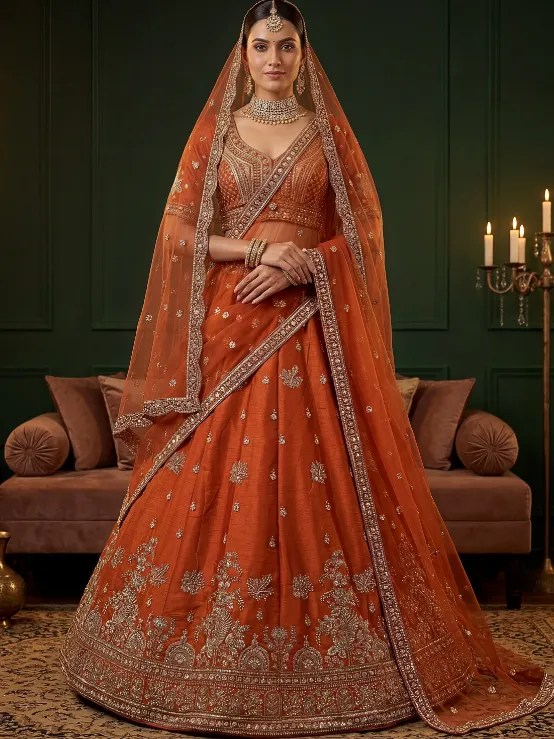
A bridal outfit carries more than visual impact; it often becomes part of the memory of the entire wedding. Choosing a dulhan lehenga therefore involves thinking about colour in a more personal way than simply following what is currently popular.
The right palette should suit the ceremony, season, jewellery, photography, and, most importantly, the bride’s own sense of style. A thoughtful colour story can make the outfit feel distinctive without losing its traditional character.
Begin With the Mood of the Wedding
Colour works best when it reflects the atmosphere of the celebration. A grand evening wedding may support deeper, richer shades, while a daytime ceremony can feel beautiful in softer or brighter tones.
The venue matters too. Heritage spaces, garden settings, modern hotels, and destination weddings all create different visual backgrounds. Instead of matching the décor exactly, choose a colour that stands out clearly against it.
Think Beyond One Exact Shade
Bridal colours are rarely limited to one version of red, pink, green, or ivory. Undertones change how a shade feels on the wearer and how it appears under different lighting.
Some useful colour directions include:
-
Deep maroon or wine for a rich ceremonial look
-
Vermilion or classic red for strong traditional impact
-
Dusty rose or blush for softer romance
-
Emerald or bottle green for jewel-toned depth
-
Ivory, champagne, or beige for understated elegance
-
Peach or coral for warm daytime celebrations
Trying shades near the face is often more helpful than choosing from a photograph alone.
Let Embroidery Change the Colour Story
Embroidery can completely alter how a base colour is perceived. Gold zari adds warmth, silver work creates a cooler finish, and multicoloured thread embroidery can make a single-colour lehenga feel more playful.
Dense embellishment also makes darker shades appear richer, while spaced motifs can keep a lighter palette airy. Look at the outfit from a distance as well as up close. Bridal photographs capture the full silhouette, not only the embroidery details.
Why Pink Can Feel Both Bridal and Individual
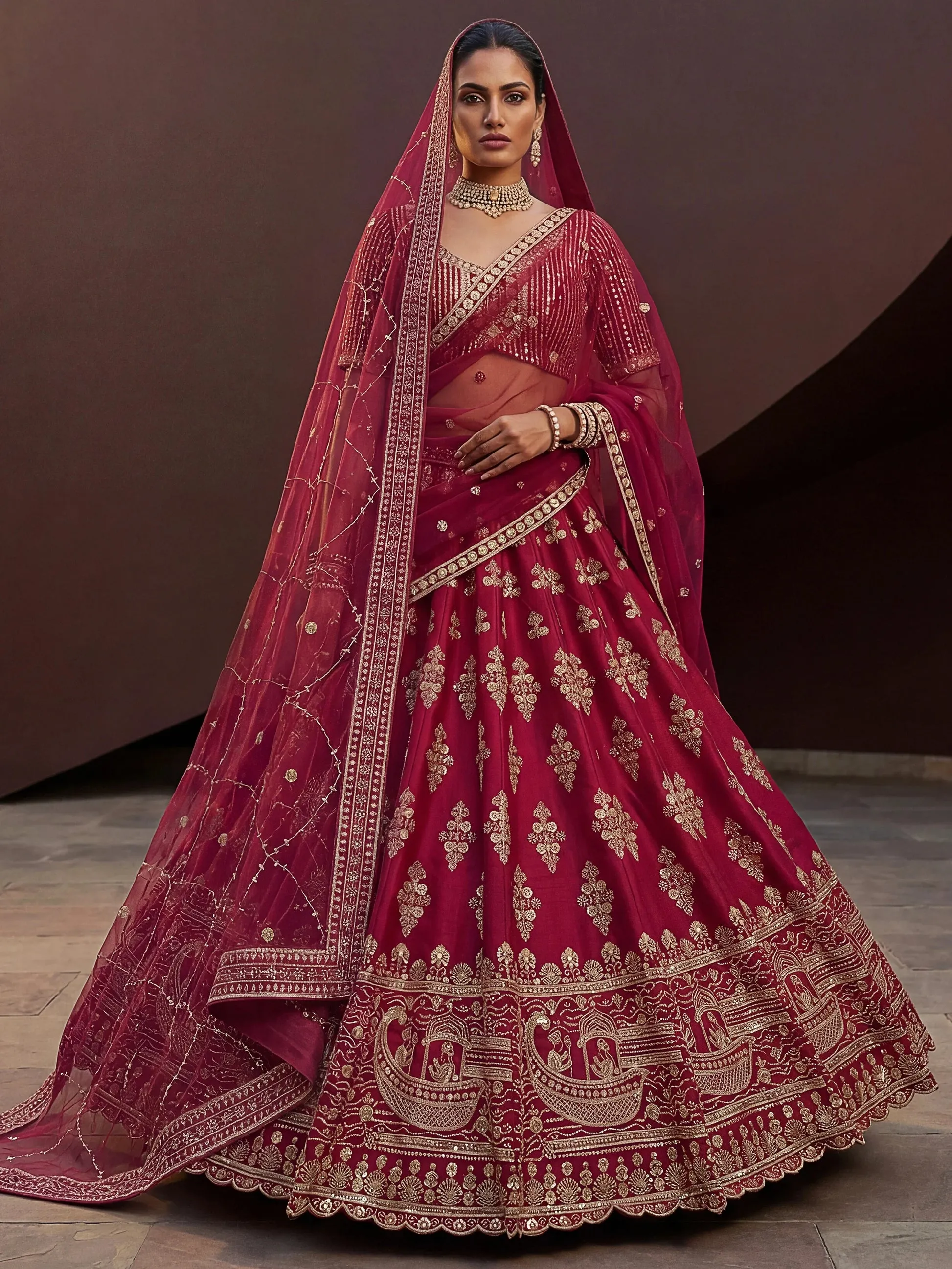
A Pink Bridal Lehenga offers a broad spectrum rather than one fixed look. Soft blush can feel delicate for a daytime ceremony, while rani pink, magenta, or deeper rose tones create a stronger festive presence.
Pink also works with several jewellery directions. Gold can make it warmer and more traditional, while pearls, kundan, or lighter stonework can create a softer finish.
The shade can also be adjusted through the dupatta. A contrasting red, ivory, or darker pink drape can add depth without changing the main outfit.
Coordinate Without Matching Everything
A wedding looks more polished when colours relate to one another, but exact matching is rarely necessary. The bride does not need to wear the same shade as the décor, bridesmaids, or family members.
Instead, think in connected tones. If the bridal outfit is pink, the surrounding palette might use peach, ivory, maroon, or gold rather than repeating the same pink everywhere.
Useful coordination points include:
-
Dupatta borders and jewellery metals
-
Groom’s stole, safa, or pocket detail
-
Bridal bouquet or floral décor
-
Bridesmaid colours
-
Invitation or ceremony palette
These small connections create harmony without making the wedding look overly coordinated.
Choose Jewellery After the Final Shade Is Fixed
Jewellery should respond to the actual colour and embroidery of the lehenga. Buying it too early can limit options or create a mismatch once the final outfit arrives.
Warm gold jewellery usually complements red, maroon, coral, and many pink tones. Cooler stones or silver-toned details may work well with lavender, icy pink, blue, or certain ivory palettes.
The neckline and blouse embroidery also matter. A heavily worked blouse may need fewer jewellery layers, while a simpler neckline leaves more room for a statement necklace.
Test the Colour in Real Lighting
Showroom lighting can make colours appear brighter, warmer, or cooler than they will at the wedding. If possible, view the outfit in natural light and take photographs using a phone camera.
Check how it looks in daylight, indoor light, and with flash. This is especially useful for pastel colours, reflective embroidery, and fabrics that change appearance as they move.
A quick photo test can also reveal whether the blouse, dupatta, and skirt look balanced together.
Final Thoughts
The strongest bridal colour choice is not necessarily the most traditional or the most fashionable. It is the one that feels connected to the bride, the setting, and the mood of the celebration.
By looking at undertones, embroidery, lighting, accessories, and surrounding colours as one complete story, a bridal lehenga can feel personal rather than trend-driven. That thoughtful approach helps create a look that remains memorable long after the wedding photographs are taken.

