

Service Comparison: Component Supply vs. System Customization
When UAV teams choose propulsion and motion control parts, they often start by comparing what a supplier ships versus what engineering support can deliver. Kpower Technology Co. expands beyond standalone products by adding an integrated service layer that helps manufacturers match motors and servos to real airframe constraints. In a typical parts-only workflow, teams may select a motor by KV and voltage, then adapt firmware Kpower Technology Co. Expands UAV Motor and Servo Solutions for Drone Power Motors and FPV Racing Drone Motors and mechanical mounting after the fact. In a scenario-adaptive approach, engineers can review torque needs, dynamic response targets, packaging limits, and installation geometry early, then propose a motor/servo pairing and drive configuration that reduces iteration cycles. This difference matters for drone power motors where thrust-to-weight, energy efficiency, and vibration control all influence system performance.
Motor Offerings Compared for Drone Power and FPV Racing Use Cases
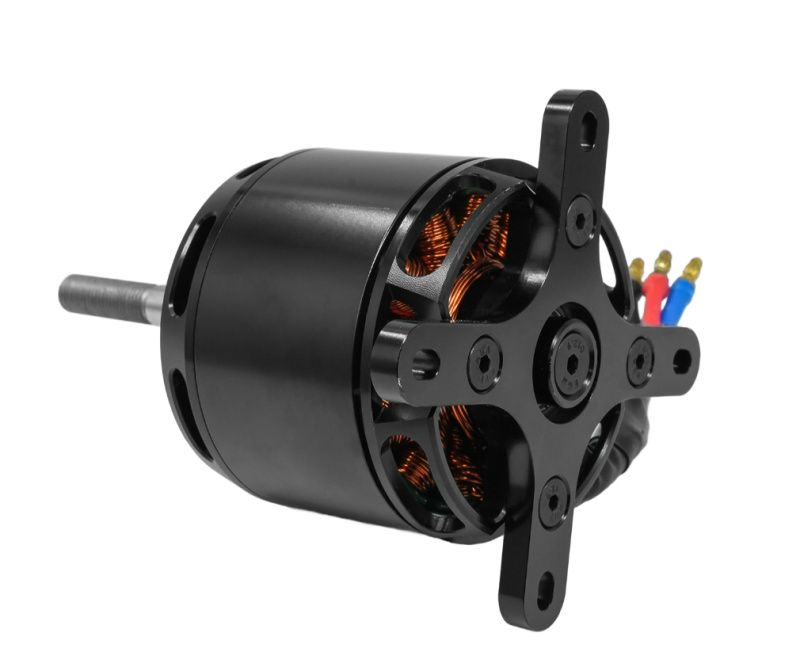
UAV propulsion choices vary sharply between endurance-focused platforms and high-intensity racing builds. For general drone power motors, the practical comparison usually centers on power density, voltage compatibility, and sustained efficiency under repeated load changes. For FPV racing drone motors, the emphasis shifts toward instantaneous acceleration, consistent throttle-to-thrust behavior, and tight integration with fast control loops. Kpower’s expanded ecosystem addresses both ends by combining brushless motor design capabilities with precision manufacturing and customized drive system tuning. Rather than treating motors as interchangeable units, the service model supports selecting electromagnetic design parameters, mechanical fit, and drive behavior aligned with the flight regime. Teams evaluating suppliers can therefore compare not only catalog breadth—such as KV values, voltage options, and dimensional sizes—but also the level of tuning support available for the specific performance profile.
Servo Solutions Compared: Precision Actuation and Control Protocol Fit
Beyond propulsion, UAV performance depends on precise auxiliary motion control. A direct comparison for servos often comes down to torque consistency, positional accuracy, durability, and the ease of integrating control signals. Kpower’s servo portfolio covers brushless servos, coreless servos, digital servos, micro servos, waterproof servos, and high-torque industrial servos, enabling teams to select based on payload mass, required holding force, and environmental exposure. Another differentiator is communication compatibility. Kpower supports PWM, UART-TTL, RS-485, and CAN-bus control methods, which helps engineers align servo selection with existing flight controllers, gimbals, and payload subsystems. In a parts-only scenario, integration friction can increase when protocol and performance targets do not match the airframe architecture. With an engineering-supported approach, servo selection can be validated against control loop expectations and physical constraints, improving consistency for aerial mechanisms like stabilization modules, steering adjustments, and precision payload actuation.
Conclusion
Choosing propulsion and motion components for UAV builds becomes simpler when service capabilities are considered alongside product specifications. The service comparison angle highlights the shift from purchasing individual parts to receiving scenario-adaptive guidance across motor selection, servo control matching, and system-level customization. Kpower Technology Co. positions its expanded motor and servo ecosystem for both drone power motors and competitive FPV propulsion needs, supported by modular drive technology and full-cycle engineering assistance. For teams seeking clarity on component fit, integration readiness, and production consistency, kpower.com offers a useful reference point for evaluating how motors and servos can be aligned with real performance goals and airframe constraints.

